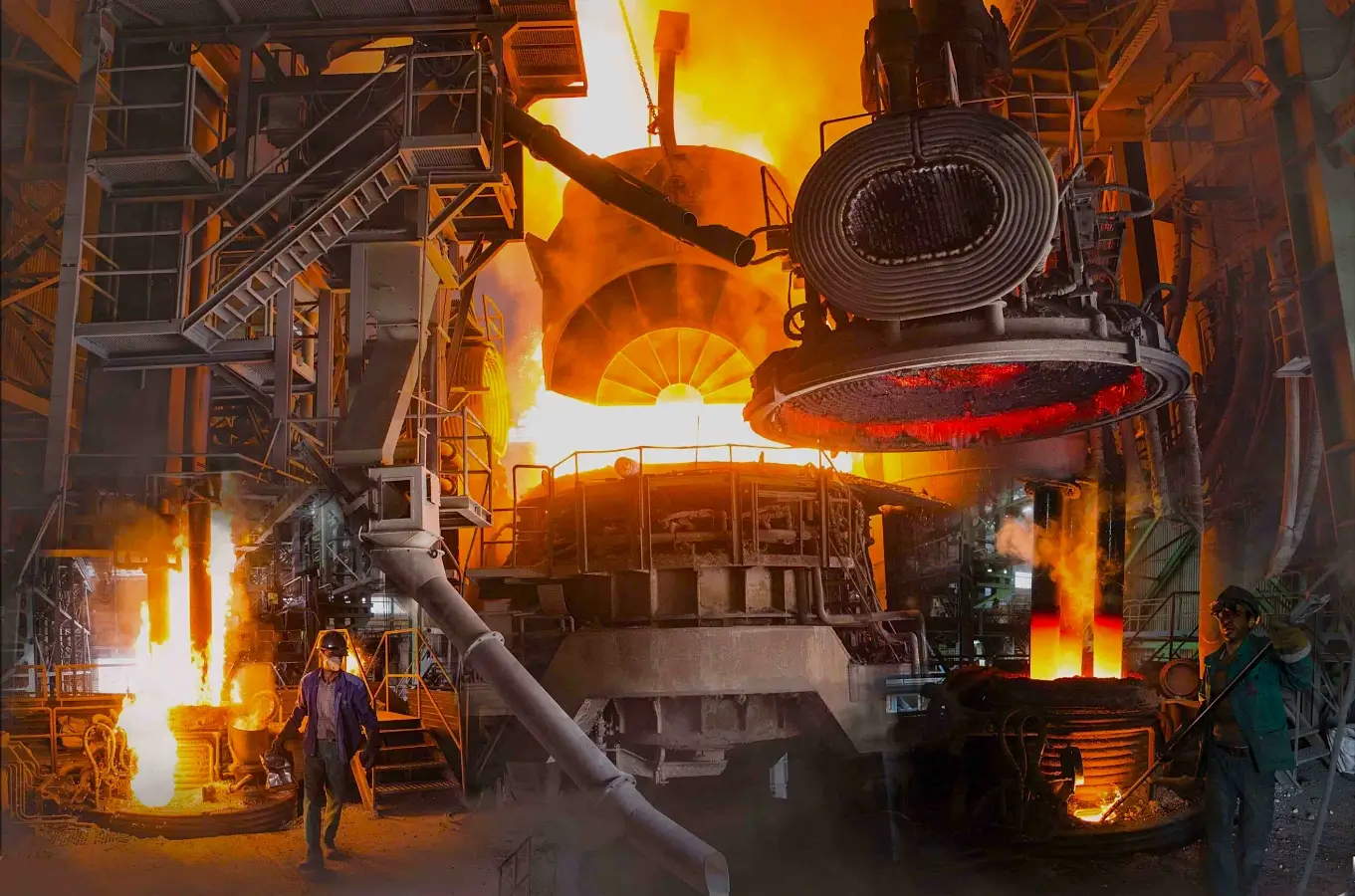
ARASWELD Industrial Welding Gloves for Extreme Heat and High-Risk Work
ARASWELD supplies industrial welding gloves for professional TIG, MIG, Stick, and heavy-duty applications. Our range combines heat-resistant leather construction and reinforced seams with model-specific performance ratings under EN 407 and EN 388 and, where applicable, classification under EN 12477 for demanding welding, fabrication, and material-handling environments.
Industrial Welding Gloves Types & Technical Specifications
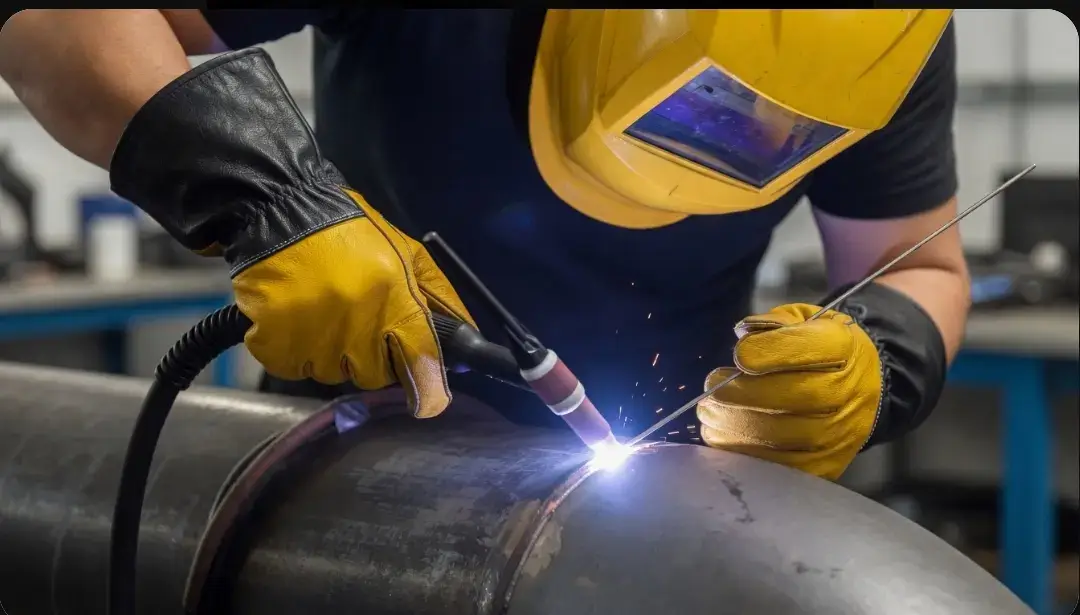
TIG Welding Gloves (Precision & Dexterity)
Designed for detailed welding work, TIG gloves offer high flexibility, precision control, and reliable heat resistance for fine metal applications.
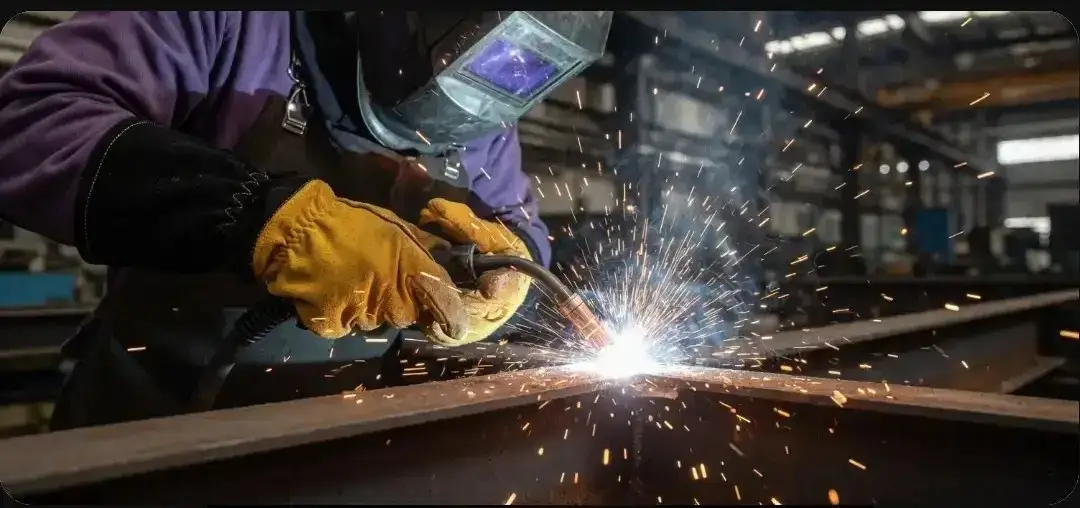
MIG Welding Gloves (Heat & Durability)
Built with thick leather and reinforced stitching, MIG gloves provide superior protection against heat, sparks, and heavy-duty welding conditions.
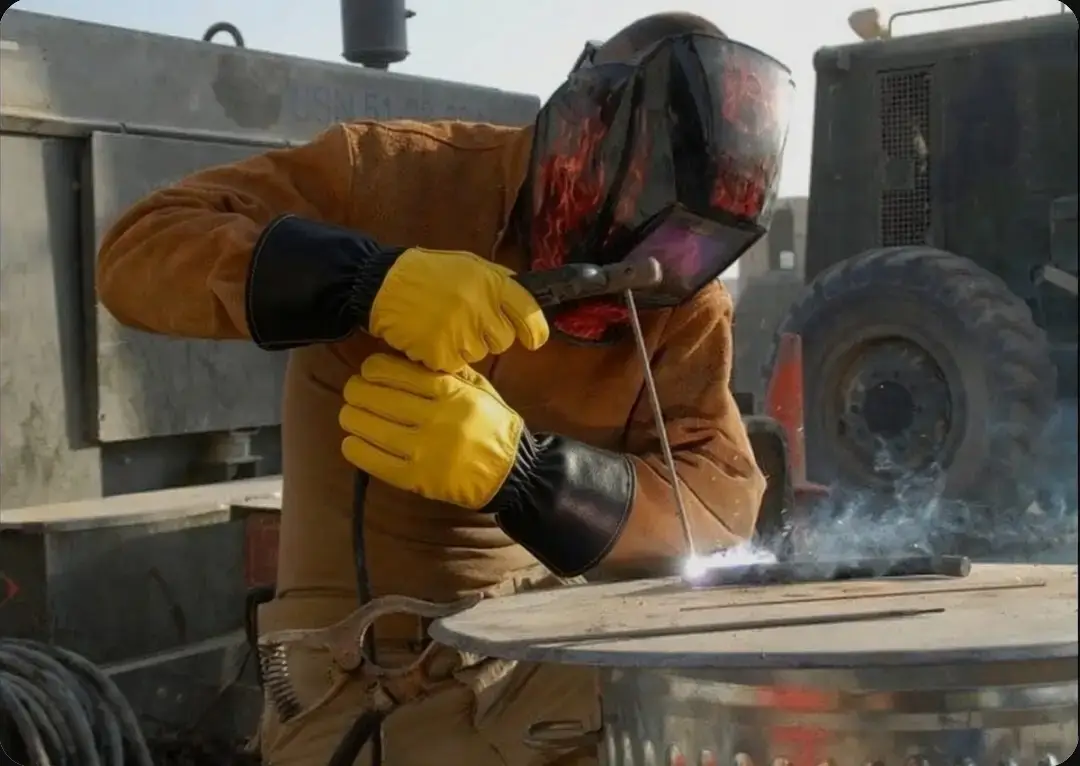
Heavy-Duty Industrial Gloves (Extreme Protection)
Engineered for high-risk environments, these gloves offer maximum heat resistance and durability for steel, oil & gas, and industrial applications.
Technical Specifications & Safety Ratings
- Heat Resistance: Up to 500°C (932°F)
- Certification: EN 407 (Heat Protection), EN 388 (Mechanical Protection)
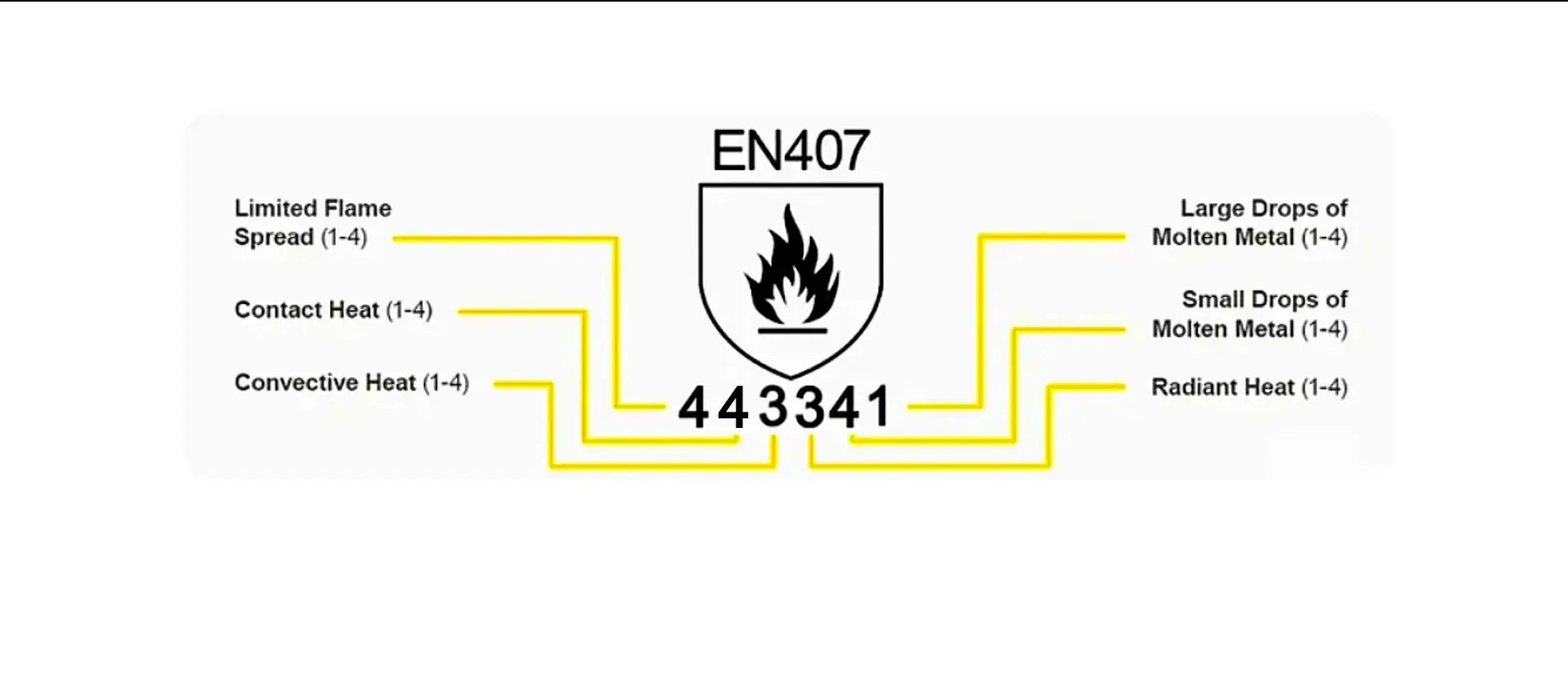
- EN 407 Rating: 443341
- Material: Premium split cow leather
- Premium Leather: 1.2 mm premium cow heat-resistant leather
- Ergonomic Fit: Optimized for maximum comfort during long work shifts
- Material Safety: Hypoallergenic and breathable interior lining
- Stitching: Kevlar reinforced
- Grip: Anti-slip palm design
- Applications: TIG, MIG, Stick welding & industrial use
Welding Glove Safety Standards for Industrial Environments
Protective gloves for welding should be evaluated using complementary safety standards rather than a single temperature or performance claim. EN 12477 is the welding-specific standard. It uses relevant thermal and mechanical requirements associated with EN 407 and EN 388, while EN ISO 21420 establishes general requirements for protective-glove design and construction, innocuousness, comfort and efficiency, marking, and manufacturer-supplied information.
EN 407 — Protection Against Thermal Risks
EN 407 evaluates protective-glove performance against thermal hazards, including limited flame spread, contact heat, convective heat, radiant heat, small splashes of molten metal, and large quantities of molten metal. For welding gloves, EN 12477 is the welding-specific standard and uses relevant thermal requirements and test methods associated with EN 407.
Read our guide to EN 407 to understand the thermal-risk tests relevant to protective gloves used for welding.
EN 388 — Protection Against Mechanical Risks
EN 388 evaluates protective-glove performance against abrasion, blade cut, tear, puncture, ISO 13997 cut resistance, and optional impact protection where applicable. These results help safety professionals compare mechanical performance, but they must be interpreted alongside the hazards and requirements of the intended welding task.
Read our guide to EN 388 to understand how mechanical performance results are tested and interpreted for protective gloves.
EN 12477 — Protective Gloves for Welders
EN 12477 is the welding-specific standard for protective gloves intended for welding operations. Type A gloves require higher minimum performance levels in several thermal and mechanical areas but have a lower dexterity requirement. Type B gloves require greater dexterity while allowing lower minimum levels in several other performance areas. Type B may be suitable for precision work such as TIG welding, subject to the hazards and workplace risk assessment.
Read our EN 12477 guide to compare the Type A and Type B requirements for protective gloves for welders.
EN ISO 21420 — General Glove Requirements
EN ISO 21420 establishes general requirements and test procedures for protective-glove design and construction, innocuousness, comfort and efficiency, marking, and information supplied by the manufacturer. It does not establish thermal or mechanical protection levels by itself and must be used with the appropriate hazard-specific standard or standards.
Learn more about EN388 vs EN407 welding glove safety standards and how these certifications apply to welding gloves.
Who We Are: Driving Global Industrial Safety Standards
ARASWELD is a specialized manufacturer and global supplier of industrial welding gloves designed for extreme heat and high-risk working environments. We focus on delivering certified hand protection solutions that meet the demands of professional welders and industrial operations worldwide.
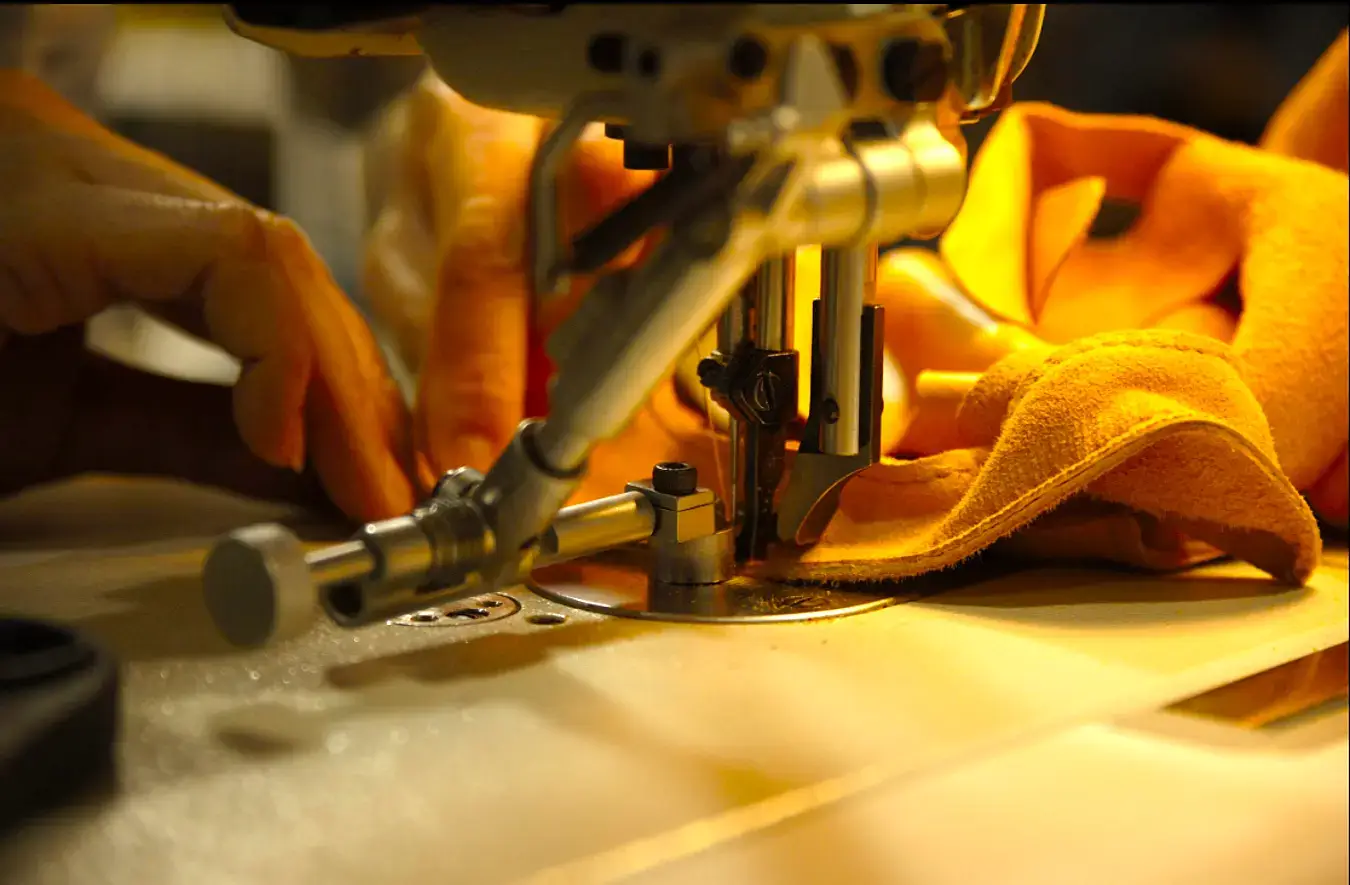

What We Do
Our products are engineered with heat-resistant materials and tested to EN407 and EN388 standards, ensuring reliable protection against thermal and mechanical hazards in industries such as steel manufacturing, Construction & Infrastructure, Shipbuilding, Aerospace & Defense, and oil & gas.
Proven Protection & Industrial Reliability
Our welding gloves are built to meet internationally recognized EN407 and EN388 standards, ensuring dependable protection against extreme heat and mechanical risks.
- Certified Protection You Can Trust
- EN407 & EN388 Certified Products
- Designed for Industrial & Heavy-Duty Use
- Trusted by Global B2B Clients
- Focus on Safety, Durability & Performance
Global Reach. Trusted Supply.
ARASWELD delivers high-performance protective gear engineered for demanding industrial environments. We support enterprise distributors and procurement networks with compliance-verified quality, flexible OEM configurations, and scalable production capacities tailored to complex global supply requirements.
Our Active Regions:- North America: United States and Canada
- Europe: Germany, France, Italy, and the United Kingdom
- Middle East: Iran, Turkey, Iraq, Egypt, Saudi Arabia, United Arab Emirates, and Qatar
- Africa: Regional Industrial Corridors
- Asia: Regional Industrial Markets
ARASWELD welding gloves, designed with a unique structure, are engineered to meet EN388 and EN407 safety standards, delivering certified cut resistance, abrasion protection, and extreme heat performance.
EN 407 Thermal Performance of ARASWELD Welding Gloves
The tested ARASWELD welding glove model achieved an EN 407 performance rating of 443341. This six-position code reports laboratory performance against limited flame spread, contact heat, convective heat, radiant heat, small molten-metal splashes, and large molten-metal quantities.
ARASWELD EN 407 Flame and Thermal Performance Breakdown
- 4 — Limited Flame Spread, Level 4: Under the reported test conditions, the material achieved an after-flame time of no more than 2 seconds and an after-glow time of no more than 5 seconds.
- 4 — Contact Heat, Level 4: The contact-heat test uses a temperature of 500°C (932°F) and requires a threshold time of at least 15 seconds. This result does not mean unrestricted or continuous handling of objects at 500°C.
- 3 — Convective Heat, Level 3: The glove achieved a heat-transfer index of at least 10 seconds under the standardized convective-heat test conditions.
- 3 — Radiant Heat, Level 3: The glove achieved a heat-transfer time of at least 50 seconds under standardized radiant-heat test conditions.
- 4 — Small Molten-Metal Splashes, Level 4: At least 35 molten-metal droplets were required to produce the specified temperature increase under the applicable test method.
- 1 — Large Molten-Metal Quantities, Level 1: The glove achieved Level 1, corresponding to at least 30 g of molten metal under the standardized test method.
EN 388 Mechanical Performance of ARASWELD Welding Gloves
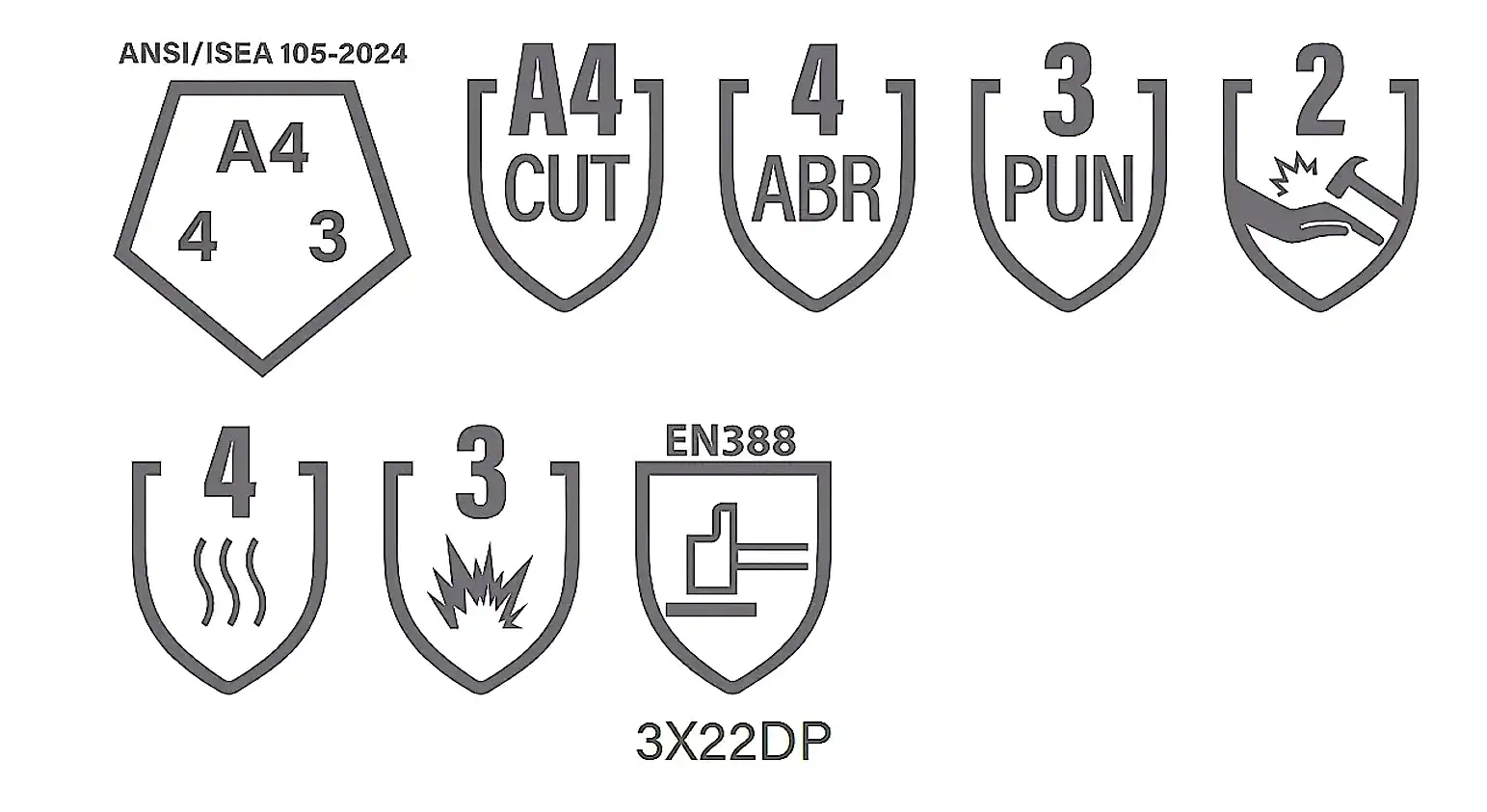
The tested ARASWELD welding glove model is reported with the EN 388 rating 3X22DP. EN 388 evaluates laboratory performance against mechanical risks including abrasion, blade cut, tear, puncture, ISO 13997 cut resistance and, where applicable, impact.
3X22DP
3 abrasion, X Coup blade-cut position, 2 tear, 2 puncture, D ISO 13997 cut resistance, and P optional impact requirement passed for the tested impact-protection area.
ARASWELD EN 388 Rating 3X22DP: Technical Breakdown
- 3 — Abrasion Resistance: The tested material achieved Level 3 under the standardized EN 388 abrasion test.
- X — Coup Blade-Cut Test: No Coup test performance level is stated in this position. The same code separately reports an ISO 13997 cut-resistance result of Level D.
- 2 — Tear Resistance: The tested material achieved Level 2 under the standardized EN 388 tear-resistance test.
- 2 — Puncture Resistance: The tested material achieved Level 2 under the standardized puncture-resistance test. This result should not be interpreted as universal protection against every sharp or needle-like hazard.
- D — ISO 13997 Cut Resistance: The tested material achieved ISO 13997 cut-resistance Level D under the applicable straight-blade test method.
- P — Impact Protection: The tested impact-protection area passed the applicable optional EN 388 impact requirement. The P marking applies only to the area and construction evaluated in the test.
Documented U.S. Mechanical-Protection Classifications
ANSI/ISEA 105-2024 Cut Level A4
The tested material achieved Cut Level A4 under the applicable ANSI/ISEA 105-2024 cut-resistance method.
ANSI/ISEA 105-2024 Abrasion Level 4
The tested material achieved Abrasion Level 4 under the applicable ANSI/ISEA 105-2024 abrasion test.
ANSI/ISEA 105-2024 Puncture Level 3
The tested material achieved Puncture Level 3 under the applicable ANSI/ISEA 105-2024 puncture test.
ANSI/ISEA 138-2019 Impact Level 2
The tested back-of-hand impact construction achieved Impact Level 2 under ANSI/ISEA 138-2019.
Heavy-Duty Industrial Welding Gloves for Demanding Work Environments
ARASWELD heavy-duty industrial welding gloves are designed for demanding applications in structural steel fabrication, construction, automotive manufacturing, and aerospace production. Built with heat-resistant leather, reinforced seams, and durable protective construction, selected models provide documented EN 407 thermal performance and EN 388 mechanical protection to help professionals manage heat, sparks, abrasion, and mechanical hazards during industrial welding and material-handling tasks.
Designed for durability, safety, and practical handling, ARASWELD gloves help industrial professionals maintain productivity while reducing exposure to task-specific risks in demanding work environments.

ARASWELD supplies industrial welding gloves with model-specific EN 407 thermal-performance and EN 388 mechanical-performance documentation for demanding industrial applications and international procurement requirements.
Find clear answers about welding glove protection, heat resistance, TIG, MIG and Stick applications, EN 12477, EN 407 and EN 388 standards, product selection, bulk ordering, samples, OEM production, and private-label supply.